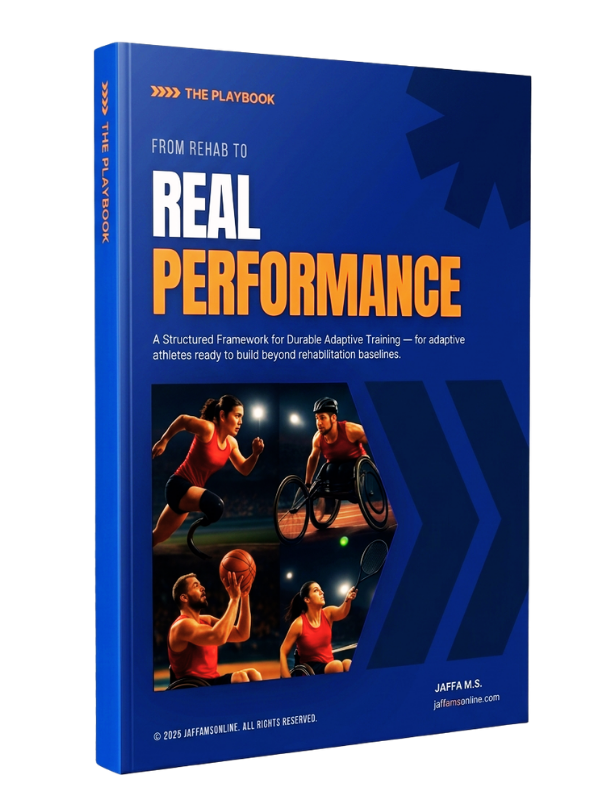
From Rehab To Real Performance
A Structured Framework for Durable Adaptive Training
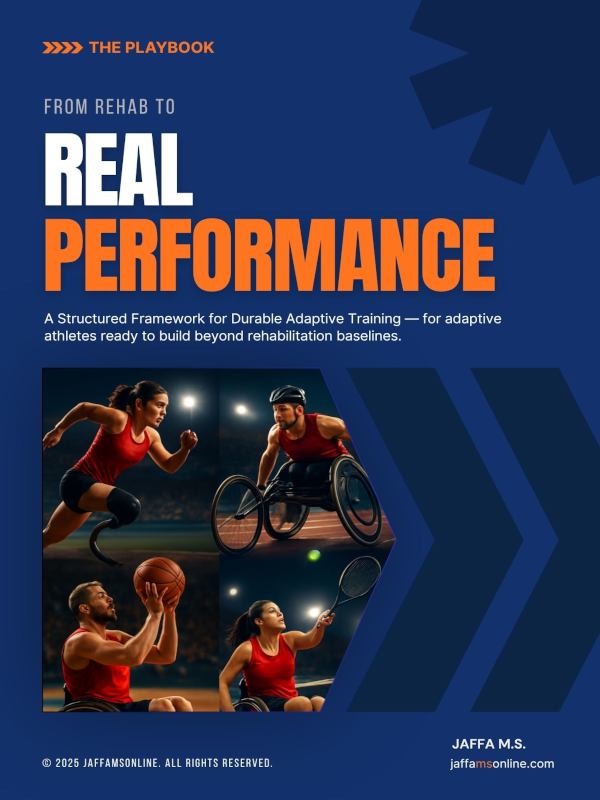
Rehab discharge is not the finish line. It is the starting point. This 32-page performance manual gives adaptive athletes and coaches the exact system to build capacity, manage load, prevent injury, and sustain long-term progress — beyond rehabilitation baselines.
Discharge Is Not
Development
Most adaptive athletes leave rehabilitation with recovered function — but no roadmap for what comes next. The systems that govern rehab and the systems that govern performance operate under entirely different demands. Confusing one for the other creates predictable stagnation.
This is not an individual failure. It is a systems gap — and this Playbook closes it.
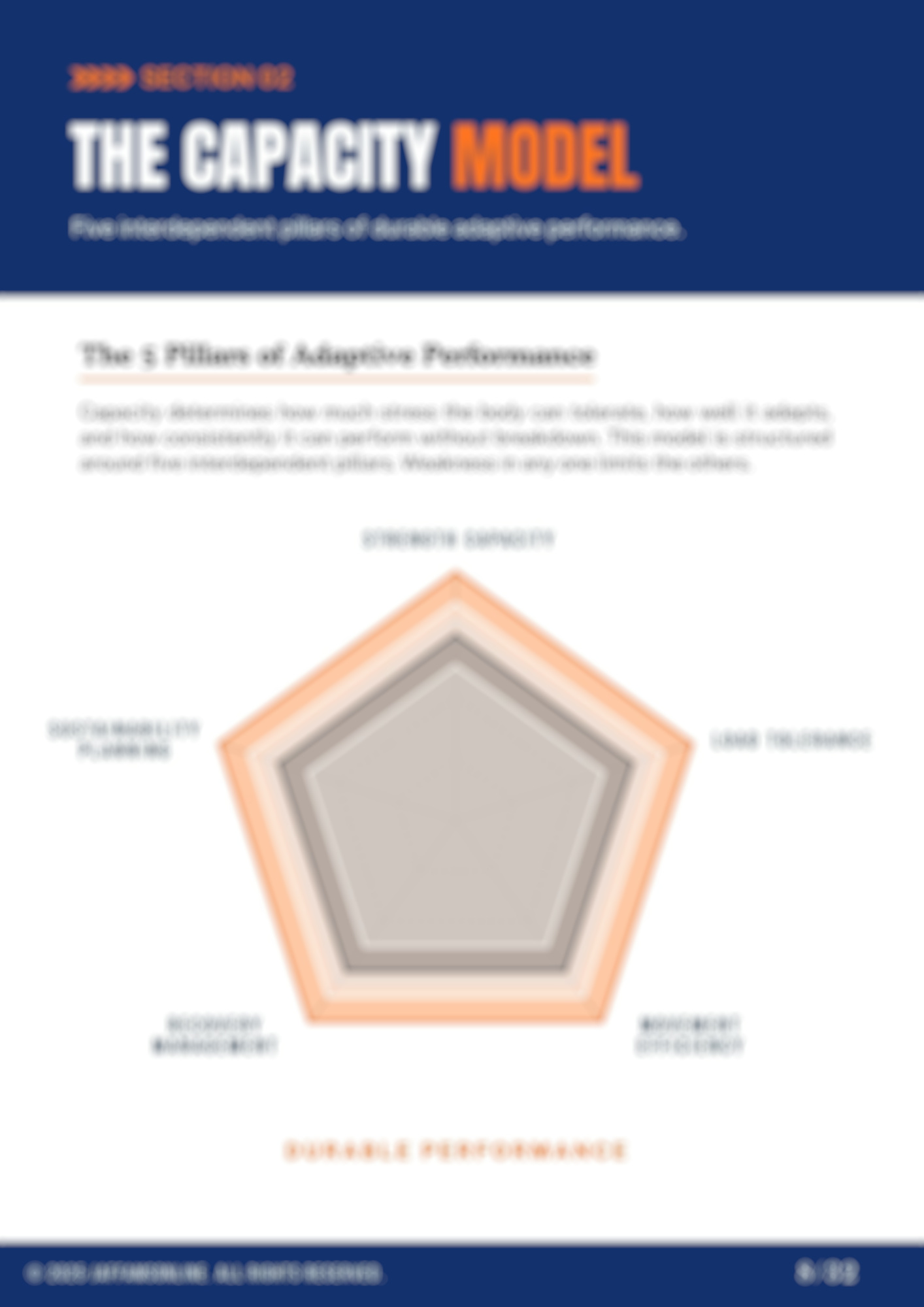
Five Pillars of
Durable Performance
Weakness in any one pillar limits the others. Before increasing intensity, assess the pillars. Where capacity is weakest — begin there.
The body's ability to produce force safely and repeatedly. Strength is not optional — it is protective.
- Improves joint stability under load
- Reduces compensatory overload
- Enhances movement confidence
The ability to handle training volume and intensity without disproportionate breakdown. Consistency builds tolerance. Spikes don't.
- Handles session frequency
- Manages weekly volume
- Recovers adequately between sessions
How effectively force is transferred through the body. This is about functional coordination — not aesthetic perfection.
- Reduces unnecessary strain
- Improves energy conservation
- Enhances technical execution
Adaptation occurs during recovery — not during training. Managing recovery is not optional programming. It is programming.
- Sleep quality for tissue repair
- Planned deload weeks
- Stress regulation
Performance that cannot be sustained is temporary. Sustainability is not a limitation — it is the architecture that makes everything else possible.
- Long-term goal alignment
- Energy bandwidth management
- Financial and time planning
Six Sections.
One Standard.
Each section builds on the last. Work through sequentially on your first read. Thereafter, use individual sections as ongoing reference tools at every training cycle.
Why rehab discharge is not the finish line — it is the starting point. Understand why so many adaptive athletes stall and what the structural fix actually looks like.
The 5 interdependent pillars of durable adaptive performance. Weakness in any one limits the others. Identify the limiting factor before adding intensity.
Progressive overload, load management, tracking and weekly structure. Six non-negotiable principles applied with precision and adjusted calmly.
Capacity-building without fear — intelligent exposure over avoidance. Impairment alone does not determine injury. Capacity does.
Identity, doubt, scrutiny, emotional regulation and long-term motivation. Confidence is built — not announced. Evidence accumulates it, structure sustains it.
10 practical coaching principles for structured adaptive programming. The role of the coach is not to protect the athlete from stress — it is to dose stress intelligently.
Be Honest
With Yourself
Protection without progression produces fragility.
When systems are strong, motivation becomes secondary. Structure carries you when emotion dips.
The coach is not defined by caution. The coach is defined by the standards they hold and the capacity they build.
You Have the Framework.
Now build the performance.
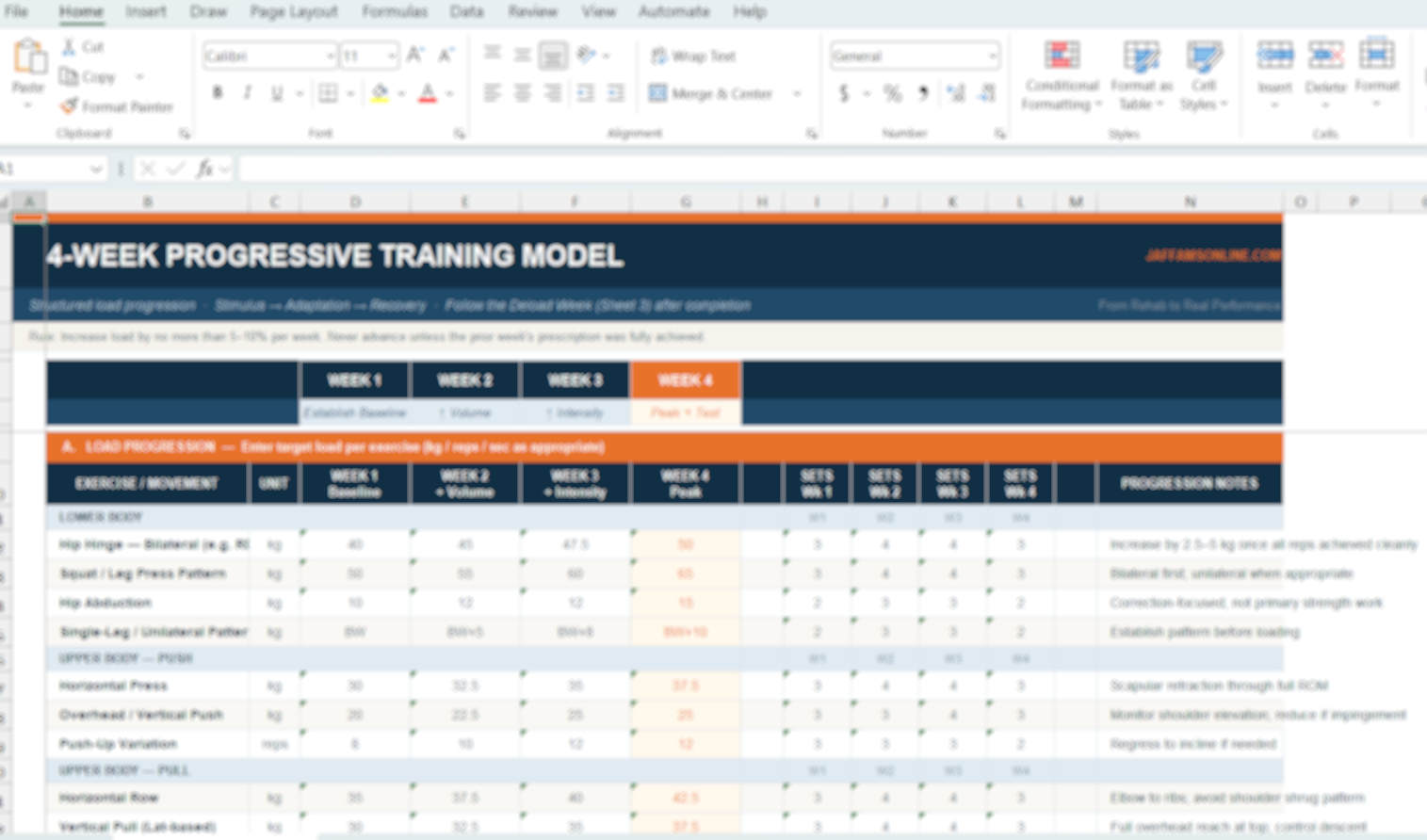
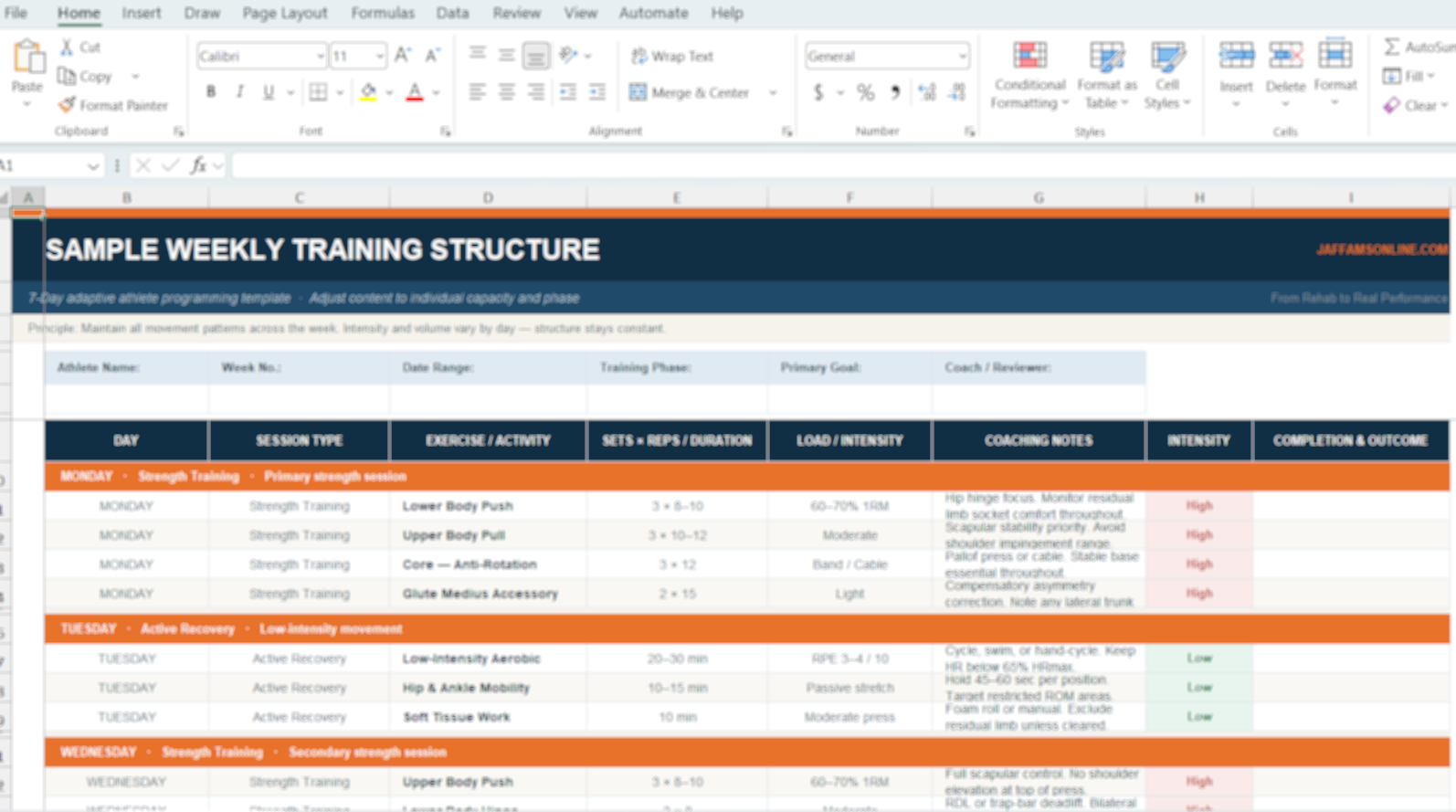
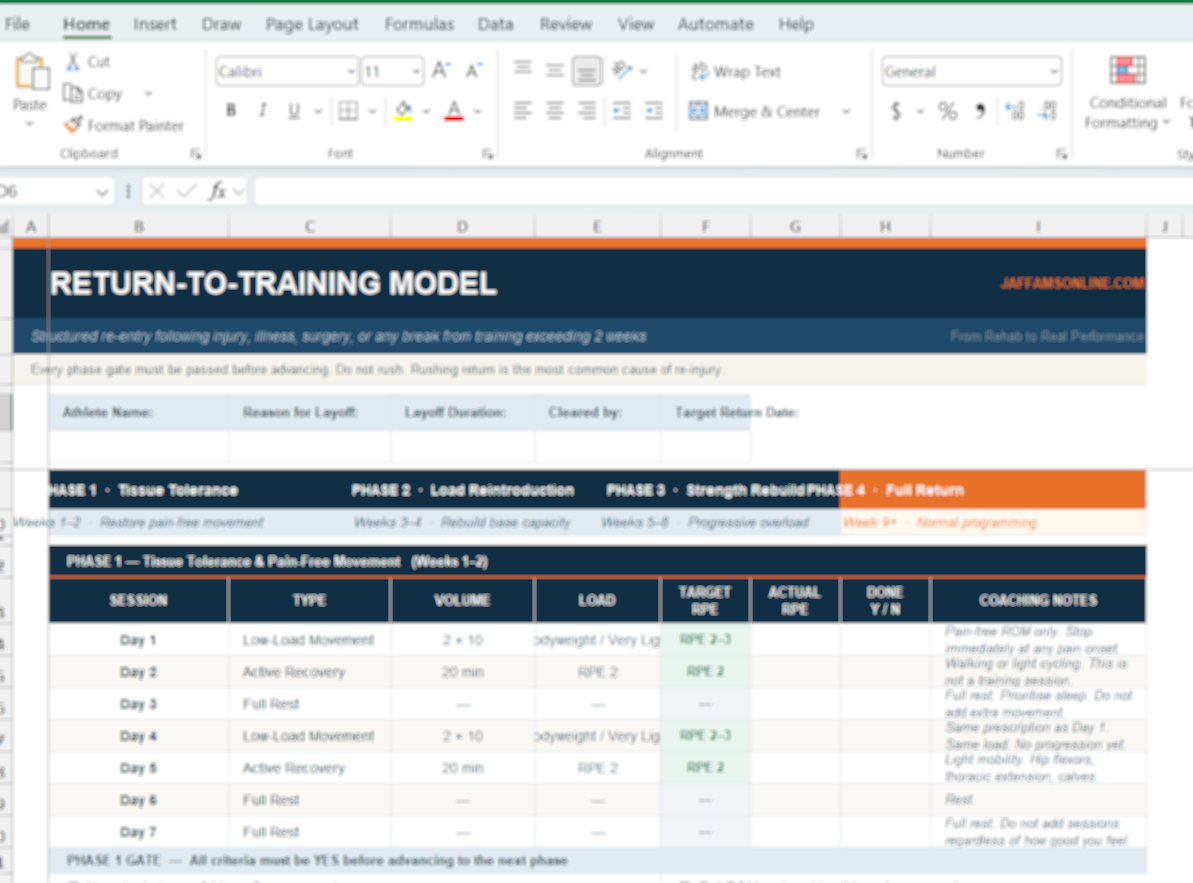
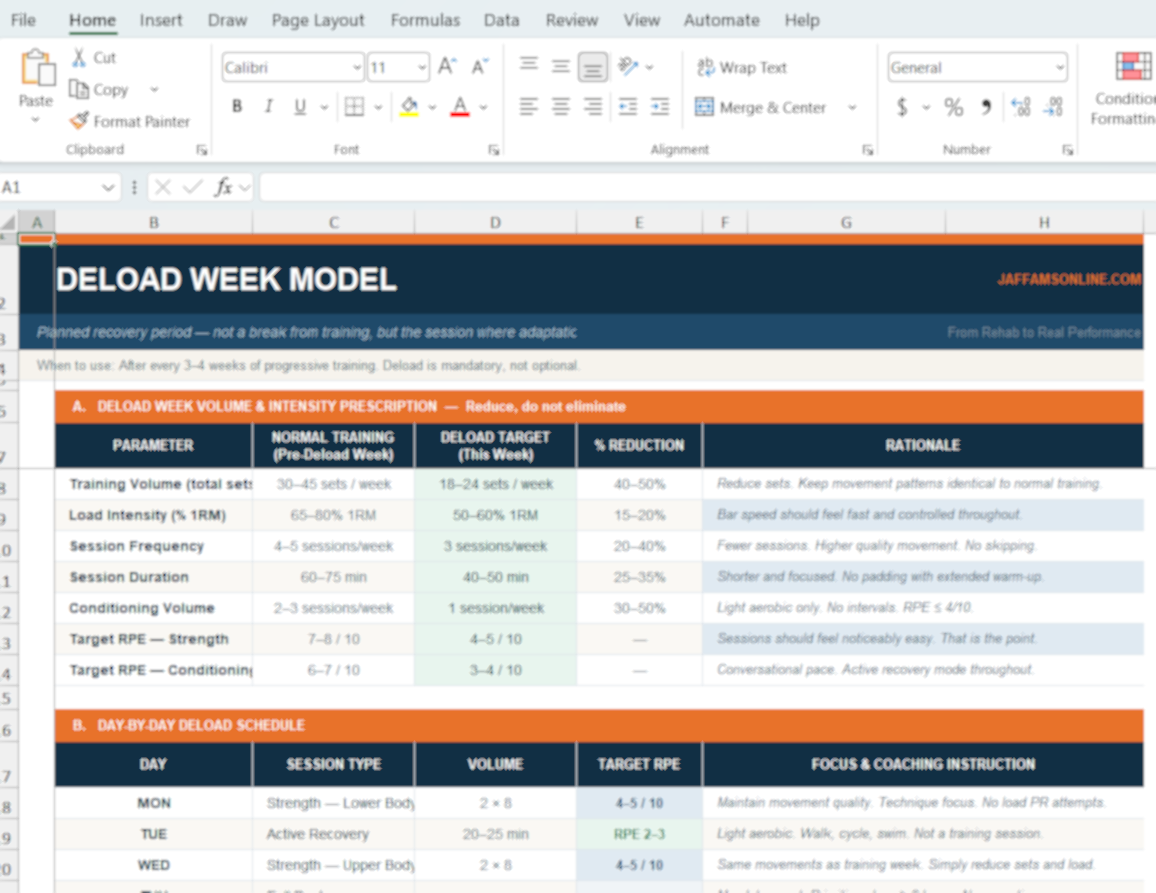
32 pages. Six sections. Four structured training templates. One system designed to take adaptive athletes from rehabilitation to real, measurable, durable performance — without shortcuts, without hype, without lowered ceilings.
Personal use license · PDF download · © 2025 JaffaMSOnline